
Heating repair & furnaceinstallation services.
Rely on our certified technicians for prompt heating repairs, efficient furnace installations, and boiler maintenance. High-performance climate engineering for Lorton, Alexandria, and Springfield homes.
 Warm air on a January morning
Warmth you can count on
Our NATE-certified technicians repair, install, and maintain all furnace, boiler, and heat pump makes and models.
Furnace Repair
If your furnace shuts off, blows cold air, or makes clicking sounds, we can help. We diagnose and fix issues with high-tech precision — safely.
Heating Installation
Modern, high-efficiency heating systems professionally sized and installed for decades of dependable warmth — gas furnaces, heat pumps, and dual-fuel hybrids.
Seasonal Maintenance
Fall heating inspections that verify heat exchangers, ignition systems, and safety controls before the first freezing night.
Heating service starts with safety
Heating equipment deserves a different kind of attention than cooling equipment because comfort and safety are tied together. A gas furnace uses combustion. A heat pump uses refrigerant and electrical components. A boiler or hydronic system moves heat through water. Each system can fail in ways that are annoying, expensive, or unsafe. The technician's first responsibility is to identify which type of failure is in front of them.
Gas furnace concerns
For a gas furnace, we look at ignition, flame sensing, burner condition, gas valve operation, inducer operation, venting, limit switches, rollout switches, blower performance, and heat exchanger condition. The heat exchanger is the metal barrier between combustion gases and the home's indoor air. A cracked heat exchanger is not a comfort defect; it is a safety concern. That is why fall maintenance includes careful inspection before the furnace is asked to run through winter.
Heat pump concerns
For a heat pump, the safety picture is different. The system must reverse between heating and cooling, defrost the outdoor coil, and bring on auxiliary heat when needed. A failed defrost board can leave the outdoor coil packed with ice. A failed reversing valve can trap the system in the wrong mode. Electric heat strips need proper sequencing, breakers, and airflow. In cold weather, those details decide whether the home holds temperature during the night.
Heating symptoms and what they suggest
A few details about the failure help us prepare the right diagnostic path.
| Symptom | Common Diagnostic Direction | Why It Matters |
|---|---|---|
| Furnace clicks but burners do not stay on | Flame sensor, ignitor, gas valve, pressure switch, venting | The control board is shutting the system down because a safety or proof step failed. |
| Furnace runs, then shuts off quickly | Dirty filter, high limit trip, blower issue, oversized equipment, blocked return | Overheating can damage equipment and should not be ignored. |
| Heat pump blows cool air in heating mode | Defrost cycle, low outdoor temperature, refrigerant issue, reversing valve, auxiliary heat | Heat pump supply air is cooler than furnace air, but it should still add heat. |
| Outdoor heat pump covered in heavy ice | Defrost sensor, defrost board, outdoor fan, refrigerant issue, drainage | Light frost is normal; heavy ice blocks airflow and reduces capacity. |
| Burning smell at first start | Dust burn-off, motor overheating, electrical issue, debris | A brief dusty smell can be normal after months off; persistent odor needs service. |
| Cold rooms far from the furnace | Duct leakage, balancing, return shortage, insulation, closed dampers | Heating equipment may be fine while distribution is failing. |
| Thermostat calls but nothing runs | Control voltage, transformer, float switch, door switch, thermostat wiring | The call for heat may never reach the equipment. |
| Loud boom at ignition | Delayed ignition, dirty burners, gas pressure issue | Delayed ignition can stress the heat exchanger and should be corrected. |
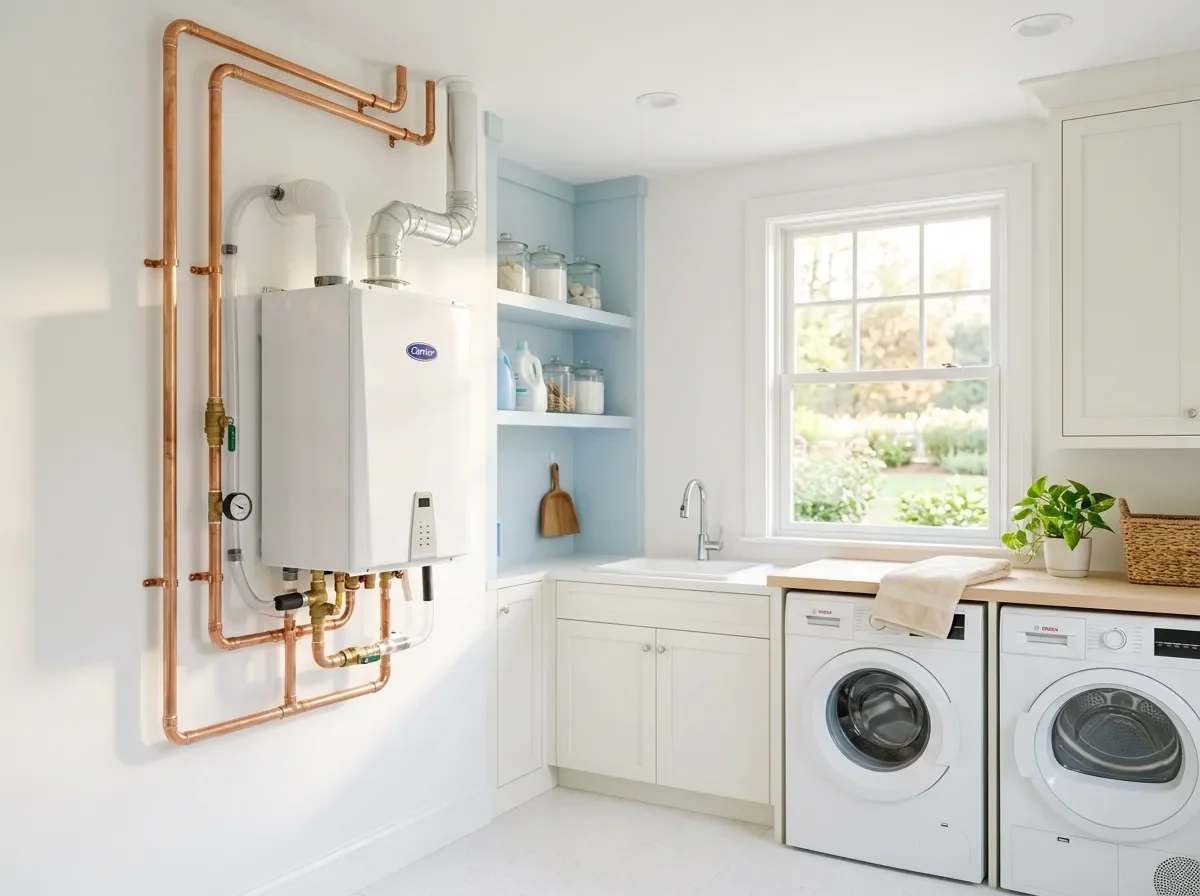
Choosing the right heating efficiency
Compare systems to find the balance between upfront cost and long-term energy savings for your Northern Virginia home. Gas furnaces are rated by AFUE; heat pumps by HSPF2 — and the right answer often depends on your existing fuel source and electrical panel capacity.
Weighing a heat pump against a gas furnace? Our technicians wrote a full comparison for Fairfax County winters.
Tax credits: federal tax credits under the Inflation Reduction Act can save up to $2,000 on qualifying heat pump installations. We help you claim what you’re owed.
Furnace, heat pump, or dual fuel
| Gas Furnace | Heat Pump or Dual Fuel |
|---|---|
| Best for homes with existing gas service, good venting options, and owners who prefer hotter supply air during cold snaps. | Best for homeowners who want electric heating efficiency, cooling and heating from one outdoor unit, and possible tax-credit eligibility. |
| Rated by AFUE, which measures how much fuel becomes usable heat. Common high-efficiency condensing furnaces reach the mid-90% AFUE range. | Rated by HSPF2 for heating and SEER2/EER2 for cooling. Performance changes with outdoor temperature and equipment design. |
| Requires safe combustion, clean burners, proper venting, and heat exchanger inspection. | Requires proper refrigerant charge, defrost control, auxiliary heat setup, and electrical capacity. |
| Delivers warmer supply air, often 120 to 140 degrees on many systems, which can feel familiar during freezing weather. | Delivers longer, gentler cycles. Cold-climate designs can perform well at Fairfax County winter design temperatures when sized correctly. |
| Usually paired with a separate air conditioner for cooling. | A heat pump provides heating and cooling; dual fuel pairs a heat pump with a gas furnace for automatic fuel switching. |
Balance point, explained for Fairfax County winters
A heat pump balance point is the outdoor temperature where the heat pump alone can no longer supply the home's full heating load. There are two kinds to understand. The thermal balance point is about capacity: can the heat pump keep the house warm at that temperature? The economic balance point is about operating cost: is it cheaper to run the heat pump or the gas furnace at that temperature?
Fairfax County winter design temperatures are roughly 17 to 22 degrees. A standard heat pump may need auxiliary heat as temperatures approach freezing, while a modern cold-climate heat pump can carry more load at lower outdoor temperatures. The house still matters. Insulation, air leakage, window quality, duct location, and return capacity all affect the load.
Dual-fuel systems use the balance point to decide when to switch from electric heat pump operation to gas furnace operation. During mild winter weather, the heat pump can run efficiently. During colder weather, the furnace can take over with hotter supply air and strong capacity. The homeowner does not have to manage that decision manually when the controls are installed and programmed correctly.
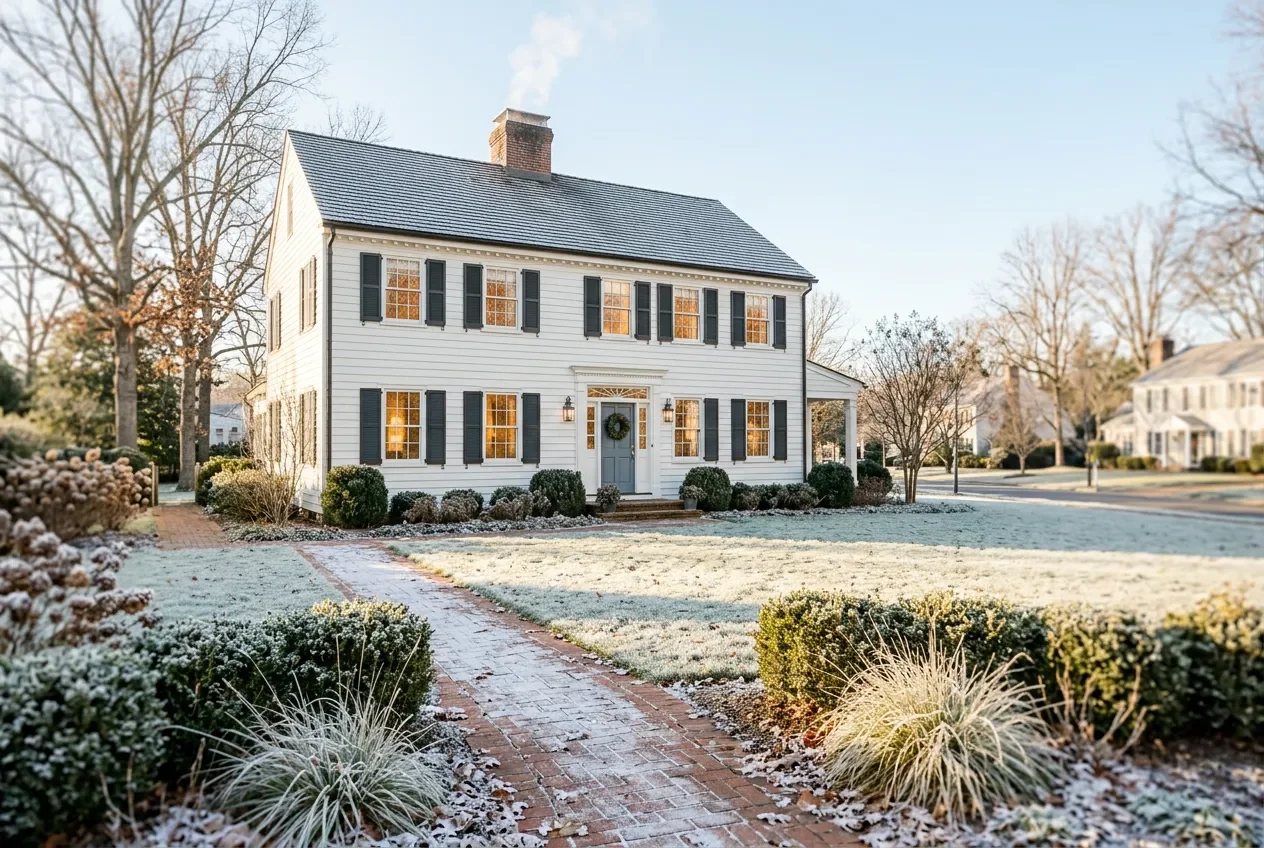
The fall heating inspection checklist
A fall inspection should prepare the heating system before nights approach freezing.
- Filter and airflow: The technician checks filter condition, return restrictions, blower operation, and static pressure because heating safety controls depend on airflow.
- Thermostat call: Thermostat programming, staging, and communication are verified for the actual system type.
- Gas ignition: Ignitor condition, flame-sensing behavior, burner operation, and startup sequence are checked on furnaces.
- Venting: Inducer operation, pressure switches, vent slope, intake and exhaust termination, and signs of blockage are reviewed.
- Heat exchanger: The exchanger is inspected for visible cracks, corrosion, rollout evidence, or other safety concerns.
- Temperature rise: Supply and return temperatures are measured to confirm the furnace is heating within its rated range.
- Heat pump defrost: Outdoor coil temperature sensing, defrost board behavior, and reversing valve operation are checked.
- Auxiliary heat: Electric heat strips, breakers, relays, and sequencing are tested where present.
- Carbon monoxide concerns: Combustion problems are treated as safety issues, not comfort issues.
- Documentation: Readings and findings are recorded so the homeowner has a maintenance history.
The physics of home heating
Home heating systems use combustion or heat transfer to maintain warm temperatures inside during freezing weather. Natural gas furnaces generate heat through combustion; heat pumps extract heat from outdoor air — even cold air — and move it indoors.
The heat exchanger contains combustion gases that heat metal walls. Indoor air passes over the outside, absorbing warmth without mixing with byproducts. That separation is exactly why annual inspections matter: a cracked heat exchanger is invisible from the thermostat but critical for safety, and it’s one of the first things our fall tune-up verifies.
Heating installation and permits
Heating replacement touches code requirements because it may involve gas piping, venting, electrical work, condensate disposal, refrigerant piping, or all of those items at once. Virginia USBC permit requirements apply to equipment replacement. Commonwealth Cooling & Heating holds the Class A contractor license and HVAC and electrical designations needed to pull mechanical and electrical permits for residential work. We handle those filings ourselves.
Details that affect code and comfort
A condensing gas furnace needs proper PVC vent sizing, intake and exhaust clearances, condensate neutralization or disposal where required, and enough combustion air. A heat pump may need electrical capacity for the compressor and auxiliary heat. A dual-fuel system needs controls that prevent the furnace and heat pump from fighting each other. Any replacement should also consider duct static pressure and temperature rise, because airflow problems can trip safety limits and shorten equipment life.
Permits and inspections do not replace good workmanship, but they do create an accountability trail. They also help future buyers, home inspectors, and warranty reviewers see that the system was installed as regulated mechanical equipment rather than a simple appliance swap.
Combustion air and venting are part of comfort
A gas furnace needs fuel, ignition, air for combustion, a safe heat exchanger, and a clear path for exhaust. If any part of that chain is wrong, the problem is bigger than comfort. High-efficiency condensing furnaces use sealed or direct venting in many installations, with intake and exhaust piping sized to manufacturer limits. Standard-efficiency furnaces use different venting requirements. The installation has to match the furnace type and the house.
Small venting errors create large risks
Improper slope, excessive equivalent length, poor termination location, blocked intake, or inadequate combustion air can lead to nuisance shutdowns, poor combustion, or unsafe conditions. A pressure switch that will not close may be reacting to a real venting problem. A rollout switch trip may indicate flame movement where it does not belong. These safeties should not be bypassed or treated as the failure by themselves.
During replacement, venting is reviewed before equipment is selected. During repair, venting and combustion are checked when symptoms point that direction. This is one reason heating service should be handled by trained technicians rather than by swapping parts until the furnace lights.
Boiler and hydronic heating notes
Some Northern Virginia homes use boilers or hydronic heat instead of forced-air furnaces. The comfort logic is different. A boiler heats water, then moves that heat through radiators, baseboard, or other hydronic emitters. There is no supply-air temperature split to measure across a duct system. Instead, the technician looks at water temperature, pressure, circulation, expansion, venting, controls, and safety devices.
Hydronic systems can be comfortable and steady, but they still need maintenance. Circulator pumps can fail, zone valves can stick, expansion tanks can lose charge, and air in the system can reduce heat delivery. If a home has both boiler heat and central air conditioning, replacement planning has to account for two separate comfort systems. A new AC or heat pump may not replace the boiler unless the homeowner is intentionally changing the heating strategy.
That separation is important during estimates. The homeowner should know which system is being repaired, which system is being replaced, and which rooms each system serves before approving work. It prevents a cooling upgrade from being mistaken for a heating solution.
Heating service FAQ
A properly sized modern heat pump can handle much of a Fairfax County winter, especially when paired with good ductwork and correct controls. Some homes still benefit from auxiliary electric heat or dual fuel. The right answer depends on the home's load, electrical capacity, existing gas service, comfort expectations, and winter design conditions.
A brief dusty smell at the first start of the season can happen when dust burns off the heat exchanger. A persistent burning smell, electrical odor, visible flame rollout, repeated shutdown, or carbon monoxide alarm deserves immediate attention. Turn the system off if safety is in question and call (703) 436-8028.
Steam during a defrost cycle can be normal. The system temporarily warms the outdoor coil to melt frost, and vapor rises as ice clears. Heavy ice that never clears, loud operation, or cold indoor air during defrost needs a technician to check sensors, board operation, airflow, and refrigerant behavior.
No heat? We’re on call.
Our technicians are on call twenty-four hours a day, providing emergency service when your heating or cooling system fails during freezing weather.